
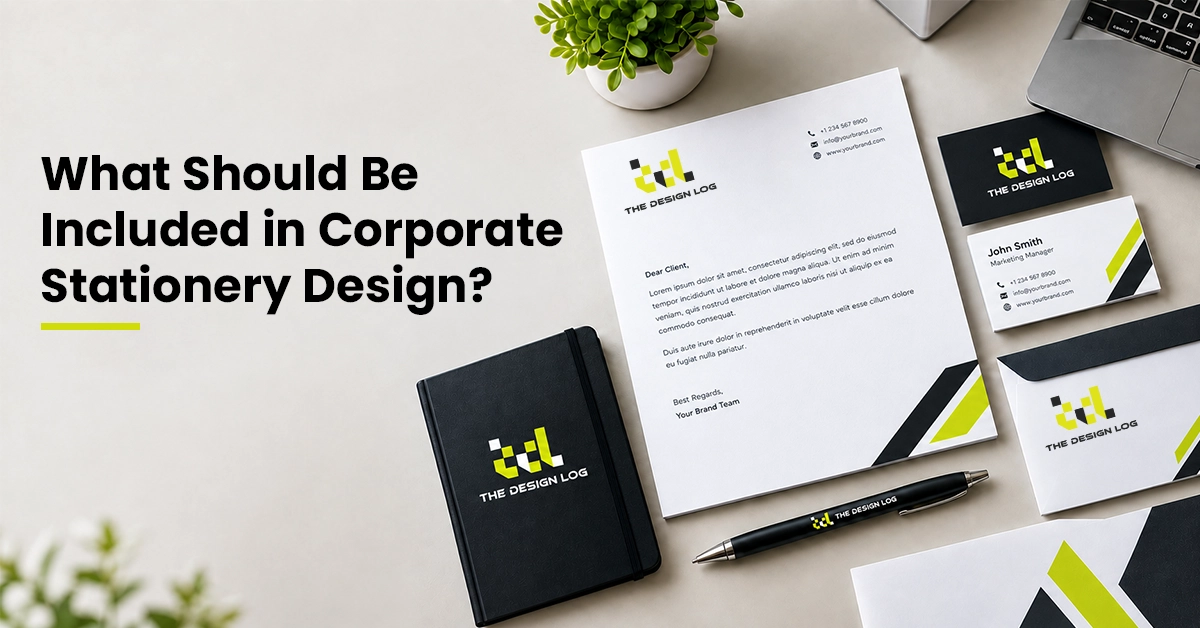
A client might forget what was discussed in a meeting. They might even forget your sales pitch. But hand them a well-designed business card, proposal, or letterhead, and your brand can stay with them for a long period.
That is the real value of corporate stationery.
Corporate stationery is often seen as a small part of branding, but it plays a role in daily business interactions. From letterhead for official business writing to invoices sent after delivery, these materials represent your business. Good corporate stationery is not complex. It simply needs to look professional and make an impact that shows it belongs to your business. So, what items are part of corporate stationery design? In this blog, you’ll get to know what corporate stationery design is, what is included in it, and why it is important for businesses.
What Is Corporate Stationery Design?
Corporate stationery design is an important element in the form of the printed and digital materials used by brands for official communication. The design materials follow the same pattern and style, including the brand’s logo, colors, fonts, and other relevant elements. This assists in presenting a business identity whenever you communicate with someone. Common examples include:
- Business cards
- Letterheads
- Envelopes
- Invoices
- Receipts
- Notepads
- Presentation folders
- Company profiles
- Email signatures
- Digital documents
A good stationery design doesn’t make every material look the same. Instead, it gives every material a connected visual style while allowing each piece to serve its own purpose.
A Corporate Stationery Checklist
Below is a table showing the main things included in corporate stationery design:
| Stationery Item | Important Elements |
|---|---|
| Business Card | Logo, name, title, contact information |
| Letterhead | Logo, company details, clean writing space |
| Envelope | Logo, name, return address |
| Invoice | Invoice details, services, amount, payment terms |
| Compliment Slip | Logo, contact details, writing space |
| Presentation Folder | Branding, contact information |
| Notepad | Logo, simple brand elements |
| Email Signature | Name, title, logo, contact details |
What Items Are Part of Corporate Stationery Design?
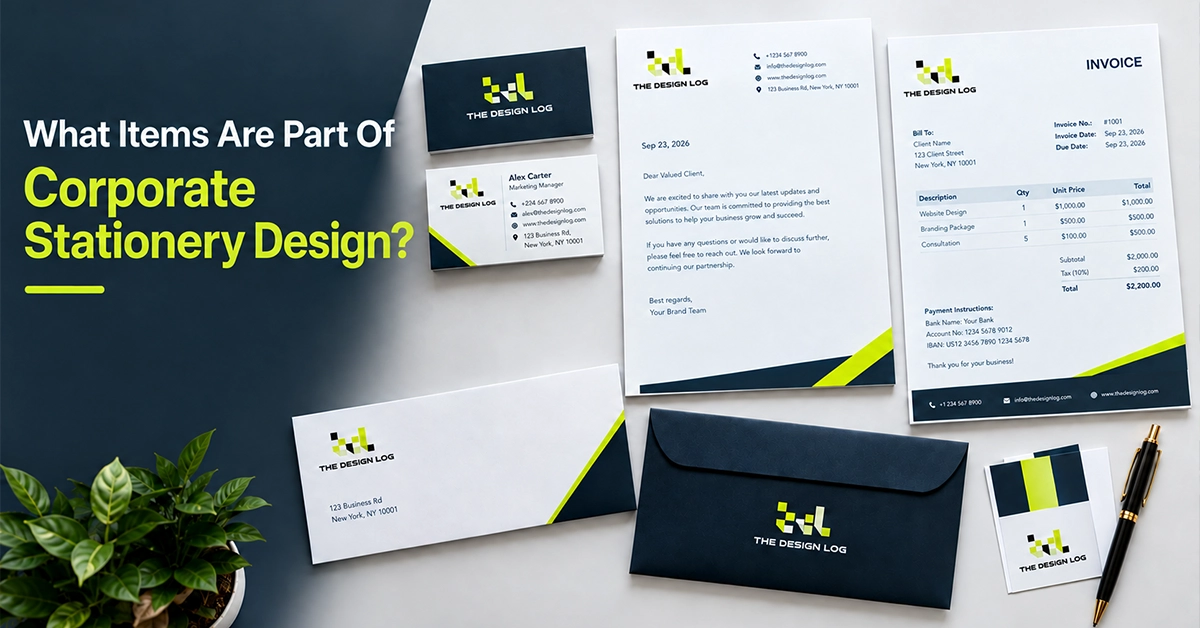
Your business stationery design USA must include essential elements such as letterhead and business card design to represent your brand professionally. Here are some of them:
1. Business Cards
At the top, business cards are one of the primary elements of corporate stationery design. They are the first thing your client receives from you, and they must include meaningful information without any vague data. According to Digital Business Card, 72% of people analyze a brand through their business card. A business card includes:
- Company logo
- Person's name
- Job title
- Phone number
- Email address
- Website
- Business address, if needed
- Social media information, if required
The layout of your business card should be clear and to the point. It is not necessary to fill every corner.
2. Letterhead
Letterheads are used for formal business communication. They can appear on proposals, official letters, agreements, reports, notices, and other documents. A professional letterhead clearly connects these documents to the company behind them. A letterhead includes:
- Company logo
- Company name
- Address
- Phone number
- Website
A letterhead should support the message. A small logo and well-placed contact details can often do the job better than a heavily decorated page. It is also worth creating a digital version. Many businesses now send documents by email, so the letterhead should work just as well on a screen as it does on paper.
3. Envelopes
Envelopes are often overlooked, but they are an important part of your business stationery design USA. Your brand envelope must contain a logo, name, and contact information. It should follow the same visual style as the business card. Imagine you’re a client. You open an envelope to find the official document. It could leave an impact on you. The envelope is an essential part of your branding. It is a small thing, but small details often make a business look professional.
4. Invoices and Receipts
Invoices are another important part of corporate stationery, especially since they directly involve payments. An invoice should have clear information for the customer to understand the payment instructions. It shouldn’t have to search to find the dues or charges. A branded invoice can include:
- Company logo
- Business name
- Customer details
- Invoice number
- Invoice date
- Services or products provided
- Quantity and price
- Taxes or additional charges
- Total amount
- Payment terms
- Payment instructions
- Contact information
The design should focus on clarity first. Too many graphics on an invoice make it difficult for your client to understand the pricing. The same goes for receipts and statements.
5. Brand Colors
Colors play a key role in creating consistency for business stationery. For instance, if a brand uses specific color variations, those colors should be used across stationery materials, such as letterheads, invoices, and folders. According to research published by the Institute for Color Research, up to 90% of people make judgments about products based on colors. Remember, it doesn’t mean that brand colors should be included in every item. Sometimes a white background with a small use of color is enough. The primary goal is to create consistency without making the stationery feel complex.
Why Corporate Stationery Design Should Be Practical
Good stationery is not just about appearance.
Every item should make sense given how the business actually works.
For instance, a brand that communicates physically may not use colorful envelopes. A company that relies on emails may benefit more from letterhead and signature. Before creating a corporate stationery design, think about what the brand uses every day. Ask:
- What materials do employees use regularly?
- What does the client see most often?
- Which documents need a professional appearance?
- What information needs to be included?
- Which items are worth printing?
This approach prevents businesses from spending money on stationery they will rarely use.
Final Thoughts
Considering corporate stationery design as an optional part can impact your brand image. It shapes your identity more than you imagine. From letterheads for official emails to an invoice sent after project completion, these small details can help create a positive image of your business. Your contact information, logo, text, and fonts should work together on your physical and digital materials. When everything follows the same pattern, your people will recognize it easily. So if you have inconsistent corporate stationery, you are not representing your brand properly to your audience. It may be time for a refresh. Looking to give your brand a more consistent look? Get in touch with The Design Log and create corporate stationery design that represents your brand the right way.